
Gold Washing Plant
Our Gold Washing Plant features an integrated flow sheet—from high-pressure feeding and scrubbing to precision screening and multi-stage gravity concentration—to achieve gold recovery rates up to 98%.
As a professional ISO-certified EPC turnkey provider with international quality qualifications (including CE and SGS), we manufacture and optimize every stage of the equipment line for both portable mobile units and industrial-scale projects.
By combining high-standard manufacturing with proven mineral processing expertise, we help mine owners minimize operational costs and ensure a reliable, high-ROI investment.
Gold Washing Plant for Sale
We offer a versatile range of gold washing plants for sale, engineered with heavy-duty structural steel and wear-resistant components to ensure maximum up-time in the harshest environments. Every system—from our mini portable units to industrial stationary plants—is optimized for superior scrubbing power and precision screening to minimize gold loss. By integrating high-efficiency drives and easy-maintenance modular designs, our equipment ensures a reliable, high-recovery operation for any production scale.
Feed Hopper
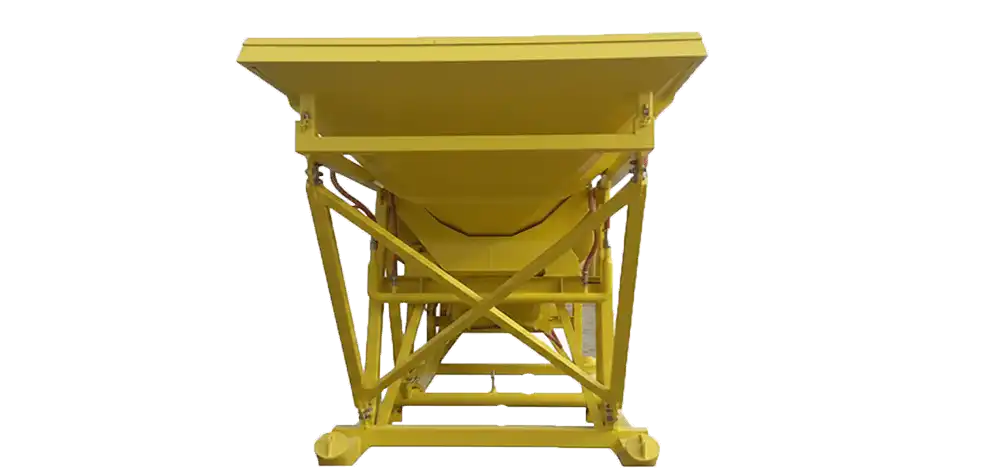
Capacity: 50–1200+ t/h
Feed size: 0–1000 mm
Alimentador de delantal
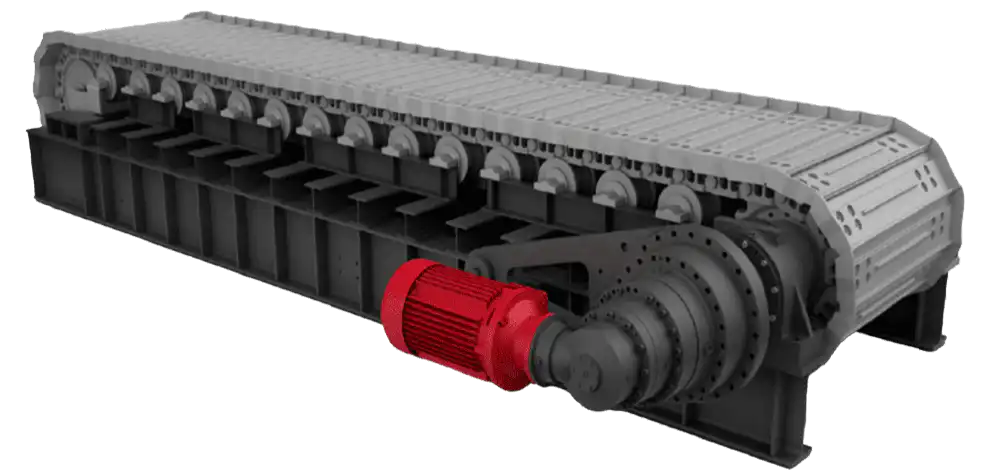
Capacity: 100–3000+ t/h
Feed size: 0–800 mm
Derocker
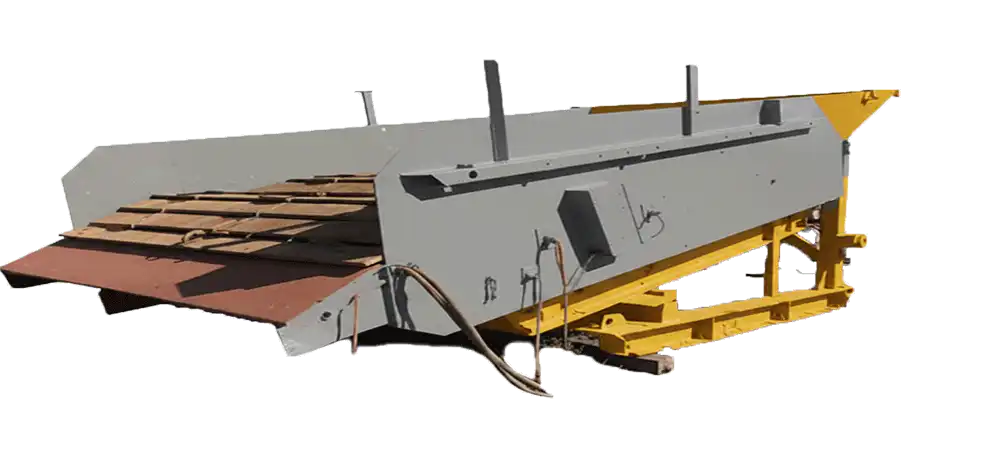
Capacity: 100–1000+ t/h
Feed size: 0–1200 mm
Sluice Box

Capacity: 10–200+ t/h
Feed size: ≤20 mm
Shaking Table
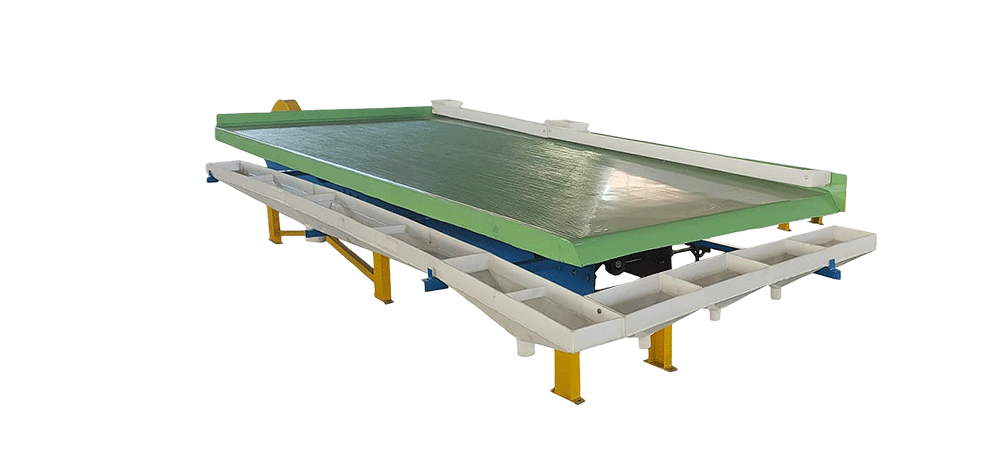
Capacity: 0.1–2 t/h
Feed size: fine sand 0.5–0.15 mm
Trommel screen
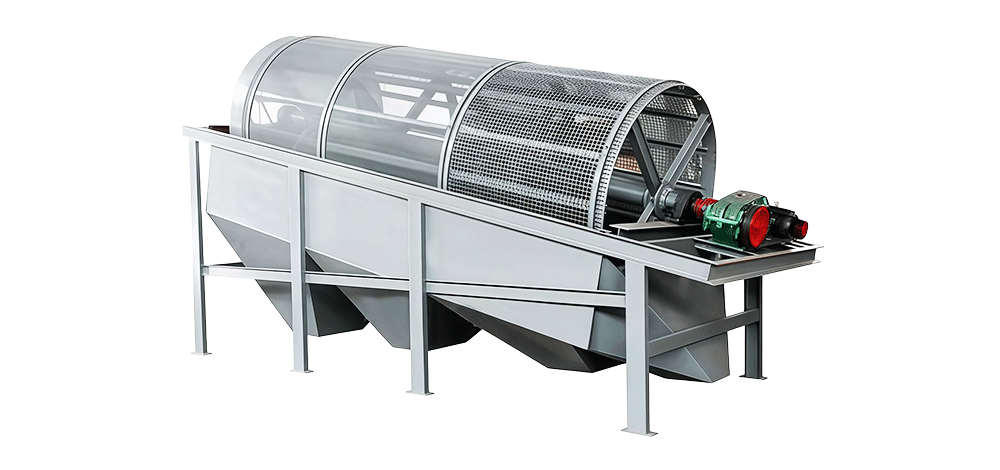
Capacity: 10–500+ t/h
Feed size: ≤80–150 mm
Vibrating Screen
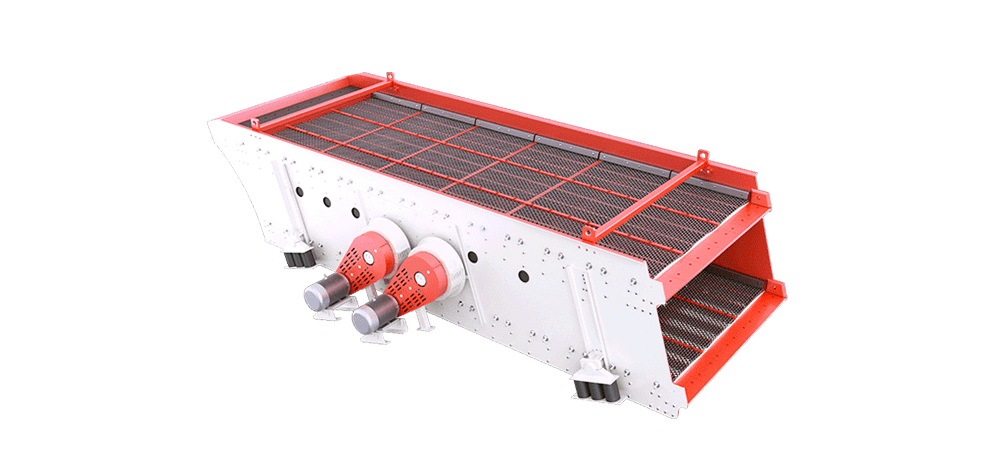
Capacity: 50–1200+ t/h
Feed size: 0–1000 mm
Jig
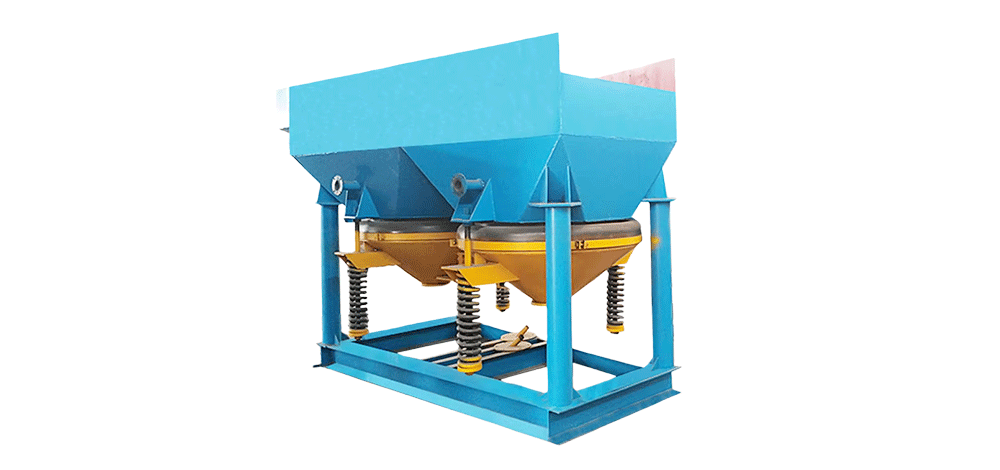
Capacity: 5–100+ t/h
Feed size: ≤20–25 mm
Fregadora de tambor
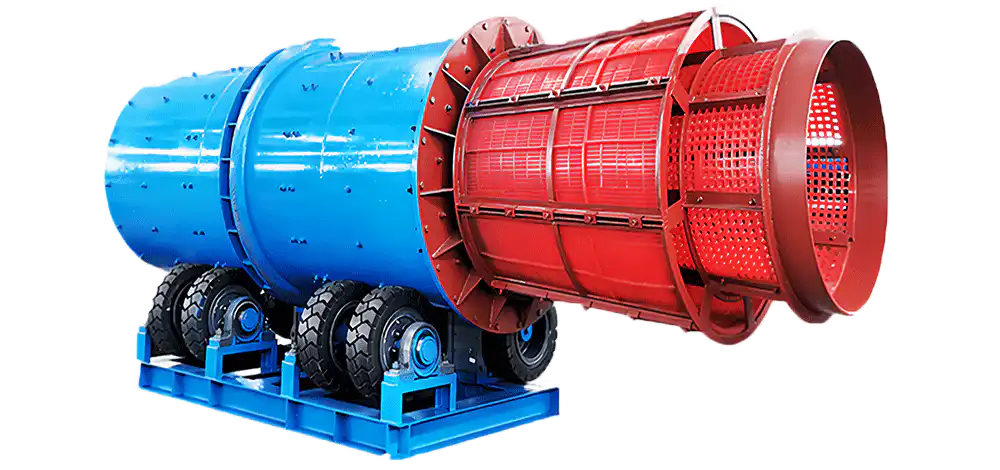
Capacity: 50–500+ t/h
Feed size: ≤180–230 mm
Centrifugal Concentrator

Capacity: 1–100+ t/h
Feed size: ≤6 mm
CSTMG Gold Ore Plant Material Handling
Alluvial and Placer Gold: Found in riverbeds and floodplains where gold has already been naturally liberated. Low clay content allows direct gravity recovery with minimal scrubbing, making this the most straightforward configuration to process.
Weathered and Saprolite Gold: Residual deposits where gold is locked inside a sticky clay matrix formed by long-term weathering. Requires high-energy trommel scrubbing to mechanically break down the clay shield before gold can reach the recovery circuit.
Tailings Reprocessing: Historical mine waste containing fine gold fractions that older sluice-only technology failed to capture. Dedicated centrifugal concentration circuits recover ultra-fine gold from existing stockpiles—no new mine permitting required.
Optimized Wet Washing Configurations for Different Scales
Wet washing remains the global standard for achieving peak gold recovery because it utilizes water as the most efficient medium to lubricate particles and facilitate gravity separation. Our systems are engineered to provide maximum mineral liberation, removing barren clay and rocks to ensure that even the finest gold is captured. By integrating high-pressure scrubbing with precision sizing, these configurations offer a chemical-free, high-yield solution that remains stable and efficient across any production scale.
1. Mini & Small Systems (1-10 TPH)
Compact, high-precision recovery units designed for rapid sampling, geological prospecting, and artisanal mining in remote terrains. These systems are built around a single-operator workflow—lightweight enough to be towed by an ATV, yet equipped with industrial-grade recovery components that deliver sampling accuracy equivalent to full-scale plants. For exploration teams and small-scale miners working in areas without road access or grid power, this configuration eliminates the need for heavy transport logistics while maintaining reliable gold capture down to fine particle sizes.
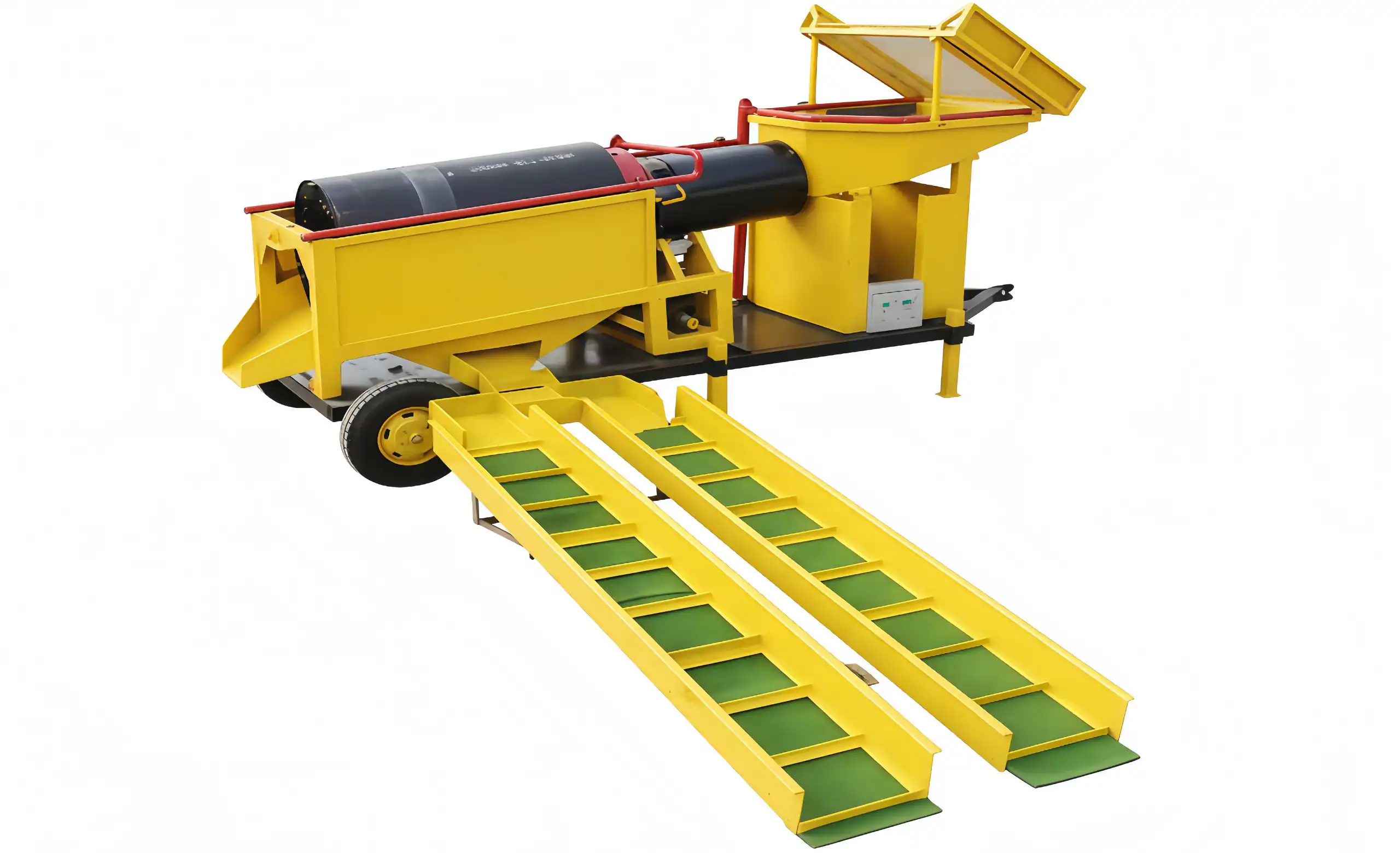
Structure:
- Feeding: Hopper
- Washing & Screening: Small Gold Trommel
- Recovery: Sluice Box
Features:
- ATV-towable lightweight chassis requires no ground preparation or heavy transport logistics to deploy in remote terrains.
- Plug-and-play commissioning with all connections pre-wired at the factory—single operator, no assembly required.
- Industrial-grade recovery components deliver sampling accuracy equivalent to full-scale production plants.
- Modular design allows individual components to be replaced or upgraded in the field without specialist tools.
- Low water consumption makes this configuration viable in areas with limited water supply or seasonal water access.
2. Mobile & Portable Units (20-100 TPH)
Agile production stations featuring integrated heavy-duty chassis, designed for rapid relocation and high-throughput versatility across changing gold veins. Operating at this scale requires a plant that can move with the deposit—whether that means relocating between seasonal claim areas or following a shifting river channel. These units are fully self-contained, with all recovery modules mounted on a single integrated chassis that can be disconnected, transported, and recommissioned without specialized rigging equipment. Two distinct configurations are available depending on the clay content of your ore.
Gold Trommel Wash Plant for Sandy Low-Clay Ore
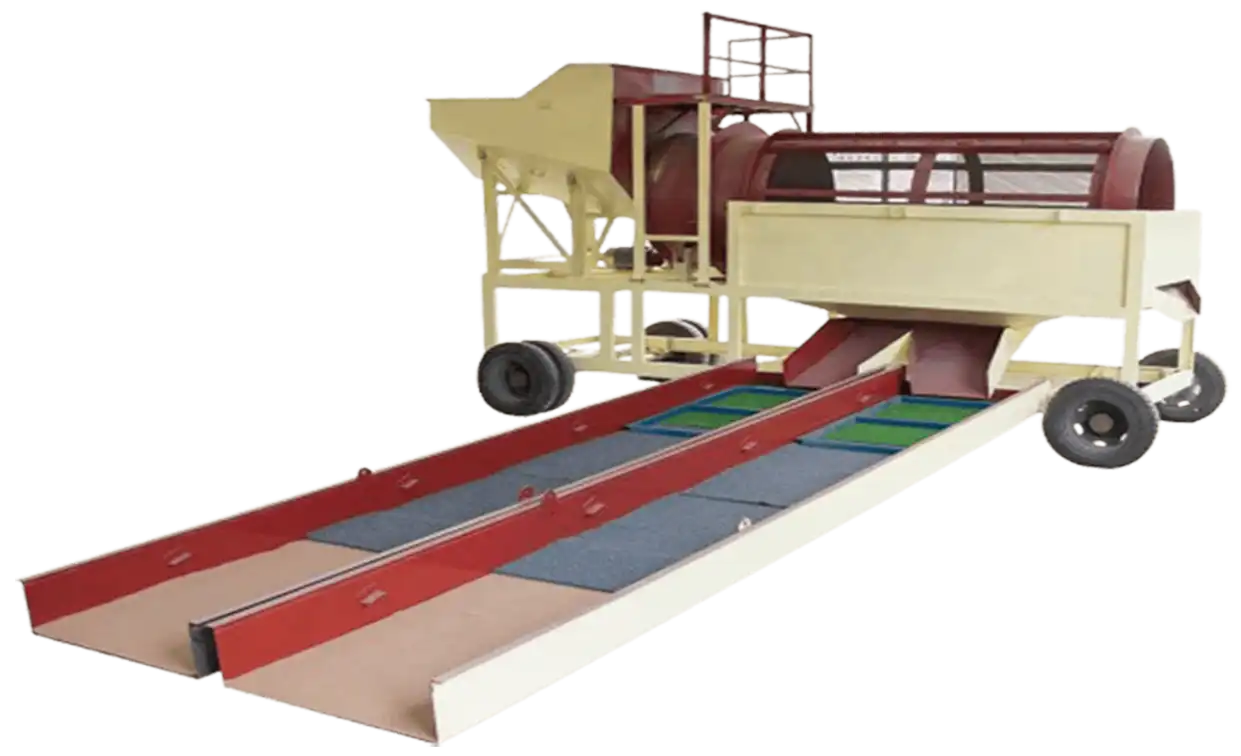
Structure:
- Feeding: Hopper
- Washing & Screening: Trommel Screen
- Recovery: Sluice Box, Centrifugal Concentrator, Jig, Shaker Table
Features:
- Optimized for ore with less than 10% clay—the processing bottleneck at low clay content is throughput speed, not liberation intensity.
- Fully screened drum dedicates the entire drum length to sizing, delivering higher throughput per diameter than scrubber configurations.
- High-pressure internal spray bars provide uniform surface rinsing across the full drum length without extended retention time.
- Lower water and energy consumption per ton compared to scrubber configurations processing equivalent material.
- Faster clean-up cycles due to minimal clay buildup inside the drum, reducing daily maintenance time and increasing operational uptime.
Gold Trommel Scrubber Wash Plant for High-Clay Ore
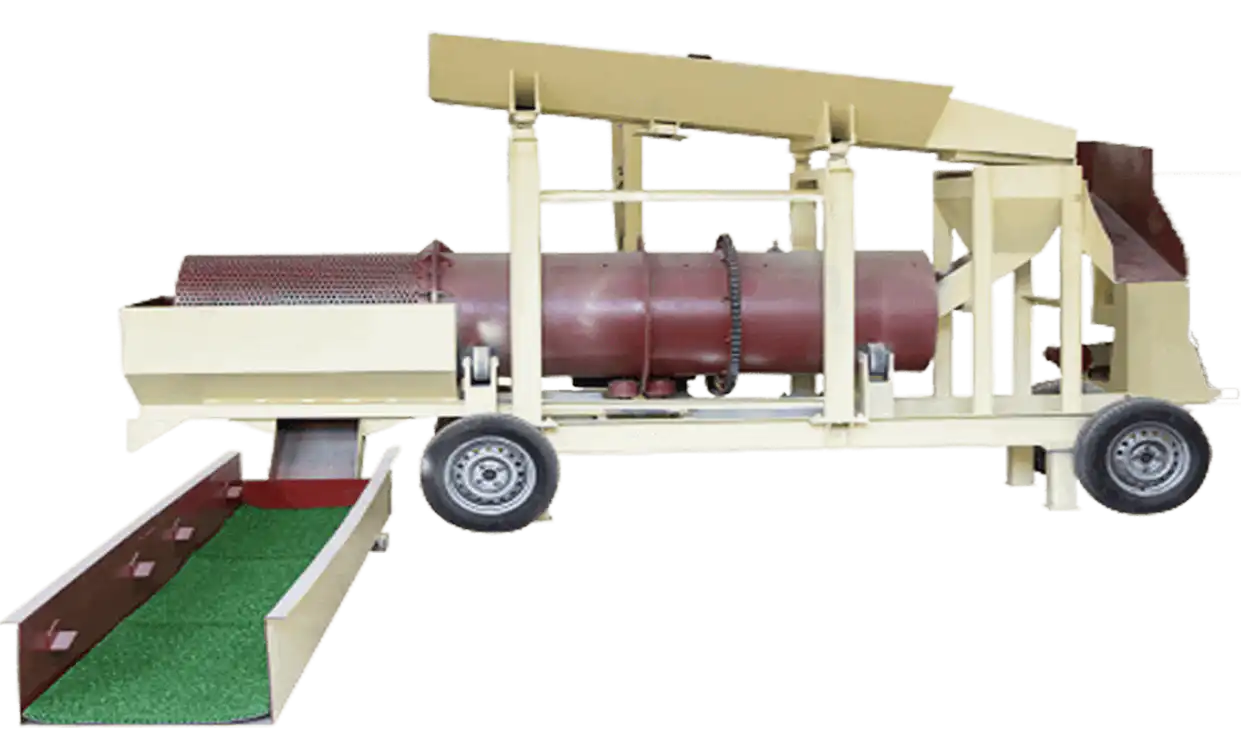
Structure:
- Feeding: Hopper
- Washing & Screening: Trommel Scrubber
- Recovery: Sluice Box, Centrifugal Concentrator, Jig, Shaker Table
Features:
- Engineered for ore exceeding 30% clay—conventional spray bars cannot penetrate the clay matrix; mechanical scrubbing is the only effective liberation method.
- Extended solid drum section creates an autogenous grinding environment that reduces clay balls to low-viscosity slurry before any sizing occurs.
- Adjustable retention time via drum speed and inclination angle, calibrated to match the specific clay characteristics of the target ore.
- Integrated rear screen section handles both scrubbing and sizing in a single machine, eliminating the need for a separate screening unit.
- Higher fine gold recovery compared to trommel screen configurations on clay-bound deposits, by ensuring complete liberation before the recovery stage.
3. Industrial Stationary Plants (150-500+ TPH)
Heavy-duty, permanently installed processing facilities engineered for continuous 24/7 commercial-scale production. At this throughput level, the priorities shift fundamentally: reliability, automation, and the ability to handle extreme feed variability—including massive boulders, high clay content, and fluctuating ore grades—become the defining engineering requirements. These plants are built on permanent steel-reinforced foundations that eliminate vibration-induced measurement drift, fed by heavy-duty apron feeders capable of absorbing the impact loads generated by large-scale excavator and shovel feeding. Centralized PLC automation manages the full processing circuit, synchronizing feed rate, water pressure, screen operation, and recovery module performance in real time—allowing a minimal operator crew to maintain peak recovery efficiency across extended production shifts.
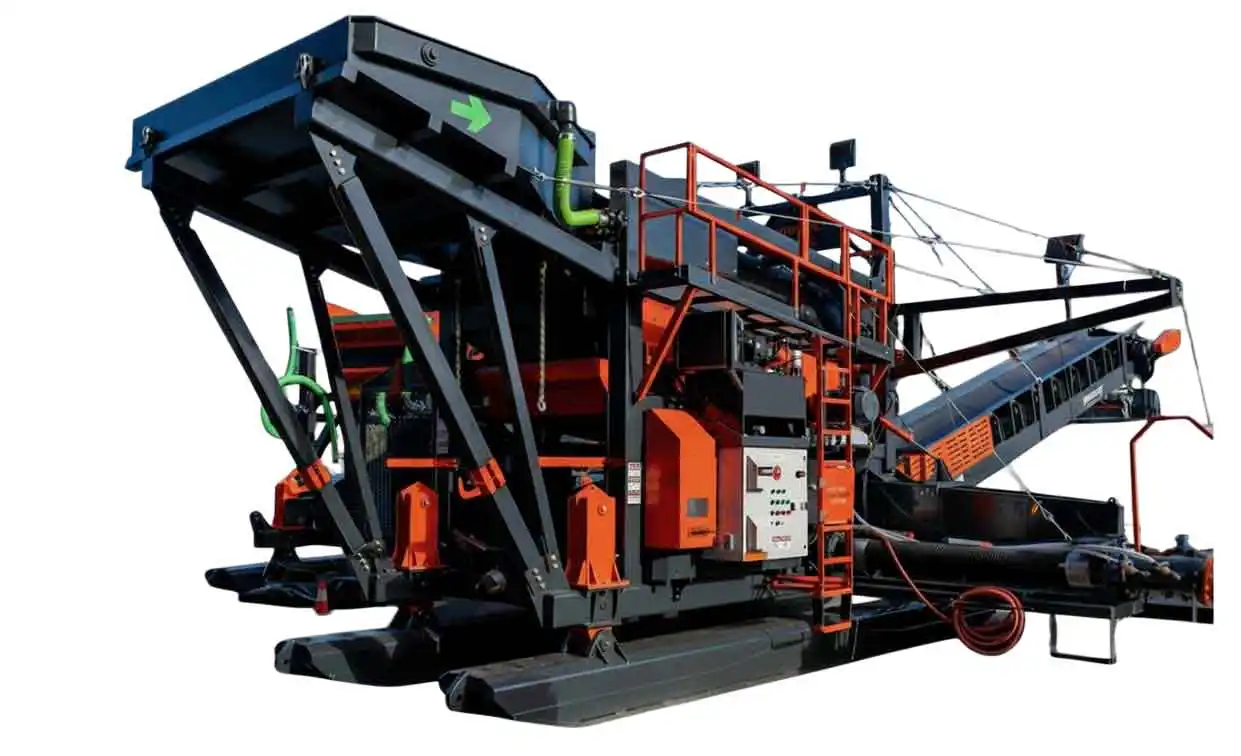
Structure:
- Pre-treatment: Derocker
- Feeding: Apron Feeder/Large Capacity Hopper
- Washing & Screening: Inclined Vibrating Screen, High-Volume Water Manifolds
- Recovery: Hydraulic Sluice Runs, Sluice Box Extensions
Features:
- Reinforced concrete foundations with anti-vibration isolation pads prevent structural loosening and module misalignment across years of continuous high-throughput operation.
- Heavy-duty manganese steel apron feeders absorb peak excavator discharge impacts without transmitting shock to the downstream processing circuit.
- Centralized PLC automation integrates all process variables into a single interface with automatic real-time correction when deviations are detected.
- High-volume water manifold systems maintain consistent pulp density and screen flushing across multiple parallel processing lines simultaneously.
- 24/7 continuous operation design with redundant drive systems and accessible maintenance points that allow scheduled servicing without full plant shutdown.
Specialized Dry Gold Washing Plant for Water Scarce Environments
Dry washing is a specialized recovery technology engineered for arid regions where traditional water-based processing is unfeasible. These systems utilize a strategic combination of high-frequency vibration and precise air-pulse technology to separate gold from dry aggregate. We offer two primary configurations—compact portable units for prospecting and high-capacity air jigs for production—ensuring maximum recovery in desert mining where water is either unavailable or cost-prohibitive.
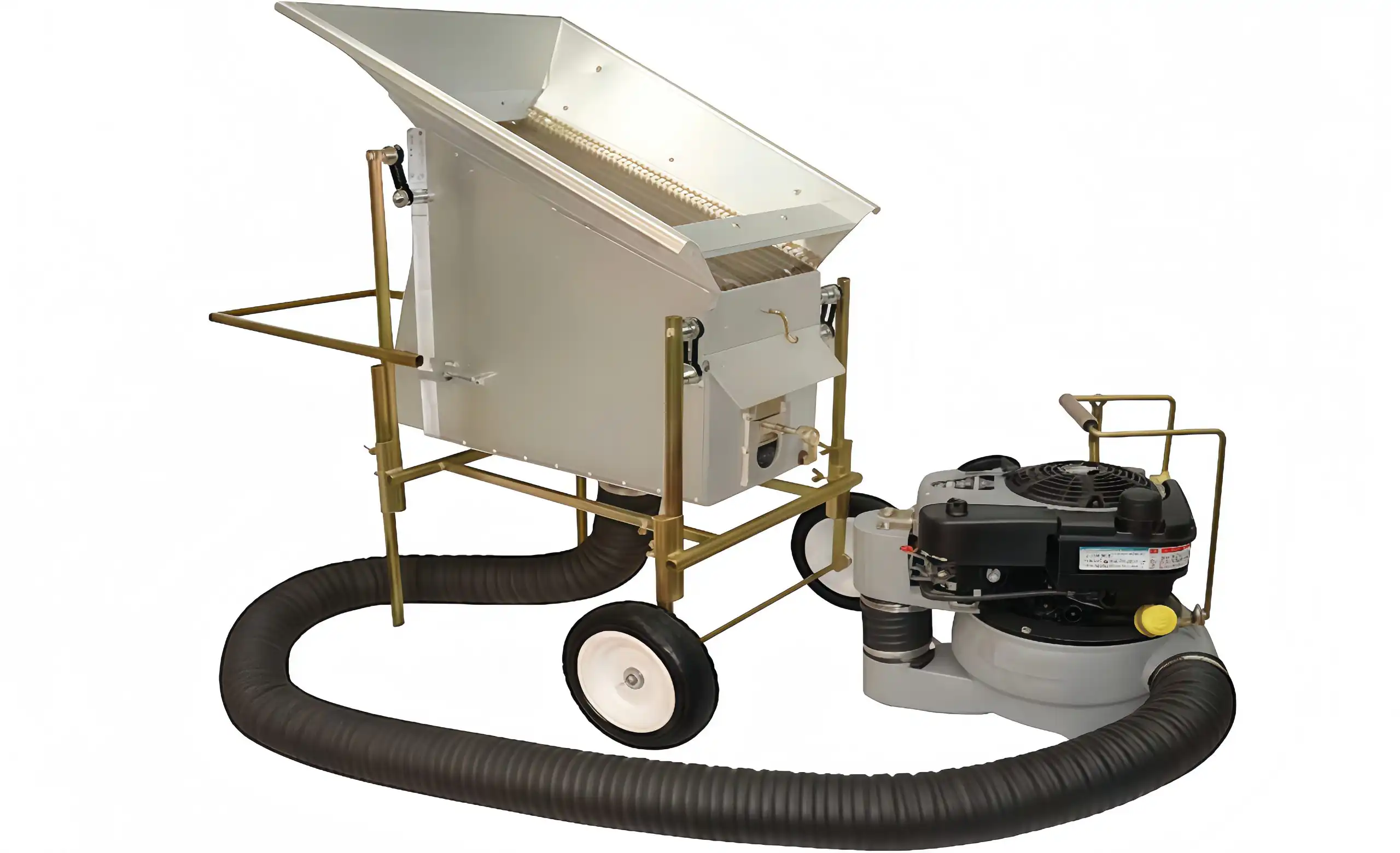
1. Compact and Portable Drywashers (1-5 TPH)
Engineered for maximum mobility in completely waterless environments, these compact units allow prospecting teams and small-scale operators to begin gold recovery immediately upon reaching a remote site—without waiting for water supply infrastructure, settling pond construction, or grid power connection. Every component is sized and weighted for ATV or light vehicle transport, making this configuration the only viable production option for arid deposits located beyond the reach of conventional mining logistics.
Structure:
- Feeding: Vibrating Hopper with Static Grizzly
- Technology: Bellows-driven Air Pulses
- Recovery: Integrated Electrostatic Matting
Features:
- ATV-transportable modular design allows a small crew to carry and deploy the unit in waterless desert terrain without heavy equipment support.
- Bellows-driven high-frequency air pulses penetrate bone-dry sand and fine dust to effectively liberate and stratify gold particles by density.
- Zero-water operation enables immediate production at the discovery site—no water sourcing, pumping infrastructure, or settling ponds required.
- Integrated electrostatic recovery matting captures fine gold fractions that conventional dry screening methods typically lose to airborne discharge.
- Rapid setup and breakdown allows prospecting teams to test multiple locations in a single day, accelerating deposit evaluation in remote arid regions.
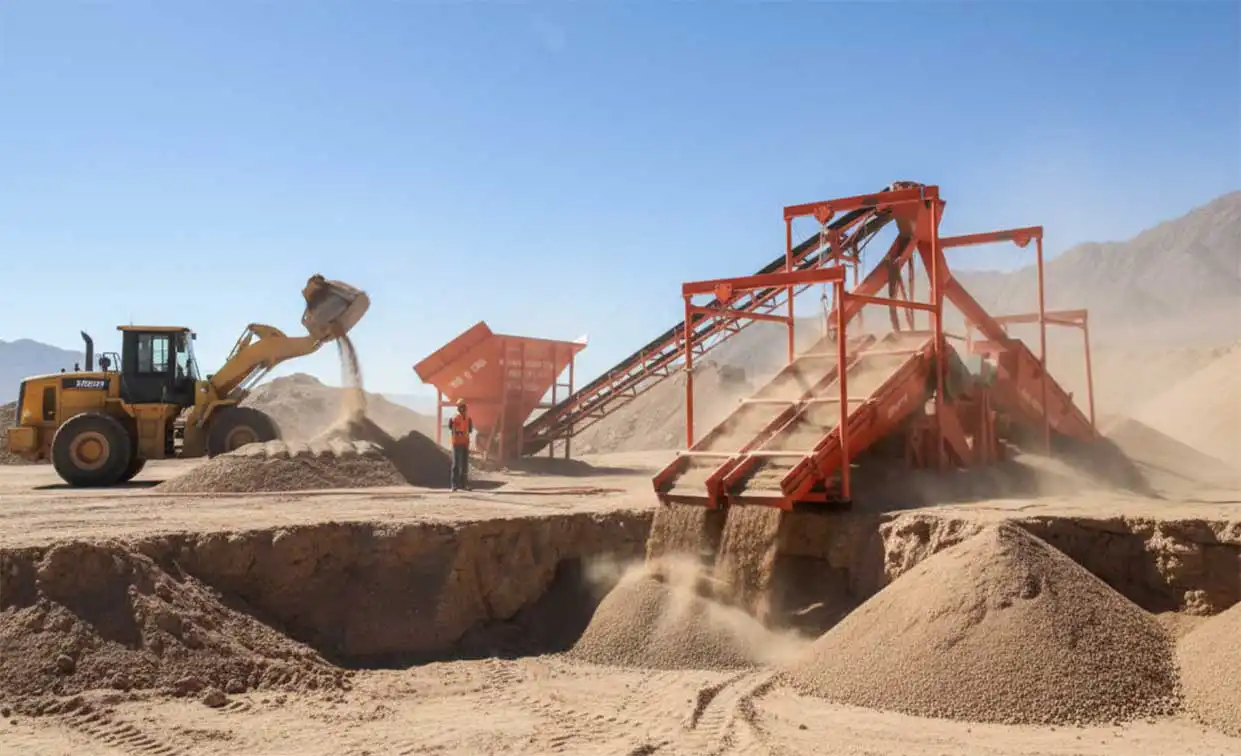
2. High-capacity Air Separation Systems (10-50+ TPH)
Built for commercial-scale production in desert mining regions where water is either completely unavailable or prohibitively expensive to source, transport, and recycle. These systems replace the water-based separation medium with precisely controlled industrial air fluidization—achieving the same density-based gold stratification as wet gravity circuits, but without the permitting complexity, infrastructure cost, and environmental liability that process water discharge creates. For operators developing large arid deposits, this configuration eliminates the single largest infrastructure barrier to commercial production.
Structure:
- Feeding: Heavy-duty Vibrating Power Feeder
- Technology: Advanced Air Jigs / Dry Concentrators
- Air Supply: Industrial High-volume Blower
Features:
- Primary configuration for commercial-scale desert operations, delivering continuous high-tonnage production without any dependence on water infrastructure.
- Industrial centrifugal blowers maintain a precisely controlled fluidized bed that stratifies material by density, ensuring consistent gold concentration at high throughput.
- Advanced air jigs and dry concentrators exploit the same gravity differential as water-based systems—without the settling ponds, water recycling circuits, or discharge permitting that wet processing requires.
- Integrated dust suppression systems control airborne particulate at the feed and discharge points, maintaining a safer working environment and reducing material loss to wind.
- Modular plant layout allows capacity to be scaled by adding parallel air jig units without redesigning the core feed or discharge circuit.
Gold Washing Plant Price Guide
The final price is primarily driven by three factors. Understanding these helps you structure your capital expenditure before requesting a quote.
Throughput
Processing capacity in TPH is the primary cost driver across all configurations.
Mobility
Portable and mobile units carry additional chassis and relocation engineering costs.
Recovery
Adding centrifugal concentrators, jigs, or shaking tables increases configuration cost.
| Process Type | Equipment Scale & Category | Target Capacity | Estimated Price Range |
| Wet Washing | Mini & Small Systems | 1 – 10 TPH | $3,000 – $15,000 |
| Wet Washing | Mobile & Portable Units | 20 – 100 TPH | $30,000 – $150,000 |
| Wet Washing | Industrial Stationary Plants | 150 – 500+ TPH | $150,000 – $1,000,000+ |
| Dry Washing | Mini & Small Portable Drywashers | 1 – 5 TPH | $2,000 – $10,000 |
| Dry Washing | High-Capacity Air Separation Systems | 10 – 50+ TPH | $15,000 – $80,000+ |
Note: These are baseline estimates. Actual gold washing plant prices depend on custom configurations. Contact us for an exact quote.
Competitive Advantages of Our Gold Washing Plant
We deliver high-value mining assets engineered for long-term profitability. Our competitive edge lies in our ability to transform complex metallurgical challenges into streamlined, high-yield operations. Here is why serious mine operators worldwide consistently choose us.
1. Professional EPC Project Delivery
Most equipment suppliers stop at the factory gate. Our EPC model covers the complete project lifecycle: ore-specific flowsheet design, equipment manufacturing, onsite installation, wet commissioning, and hands-on operator training. This single-source accountability eliminates costly equipment mismatches—which routinely cause 15–30% in avoidable gold loss during the critical startup phase.
2. Multi-Stage Recovery Capturing Gold
Standard sluice-only plants are designed for coarse gold—fine particles below 0.3mm flow straight into the tailings. Our systems cascade precision screening into high-G centrifugal concentration and automated scavenging circuits, consistently achieving recovery rates up to 98% and capturing gold down to 74 microns (200 mesh). For a site processing 200 TPH, this means recovering an additional 8–15% of revenue that standard plants simply discard.
3. Engineered for the Lowest Cost
Variable Frequency Drives (VFD) dynamically match motor output to actual load demand, reducing energy consumption by up to 25% versus fixed-speed drives. Commercial-grade Polyurethane (PU) screening panels outlast steel mesh by five times, cutting replacement frequency—and associated downtime—by 80%. Together, these translate directly into a lower cost-per-ounce and wider operating margins across the full mine life.
4. Metallurgically Optimized to Eliminate Fine Gold Loss
Fine gold loss rarely happens at a single failure point—it accumulates silently through mismatched water-to-solids ratios, undertreated slimes, and oversized screen apertures. Our Gold Washing Plant is calibrated with precision-tuned pulp densities and dedicated desliming circuits that break down high-viscosity clay slurry before it reaches the recovery stage. The result: fine gold that standard plants routinely flush into tailings is systematically captured at every stage of the circuit.
Gold Washing Plant Project Cases
The following three cases cover the deposit types we encounter most frequently—high-clay laterite, clean riverbed alluvial, and mixed boulder-clay overburden. Each presented a configuration challenge that standard off-the-shelf equipment failed to solve. Recovery rates, operational continuity, and time to first gold are documented for each.
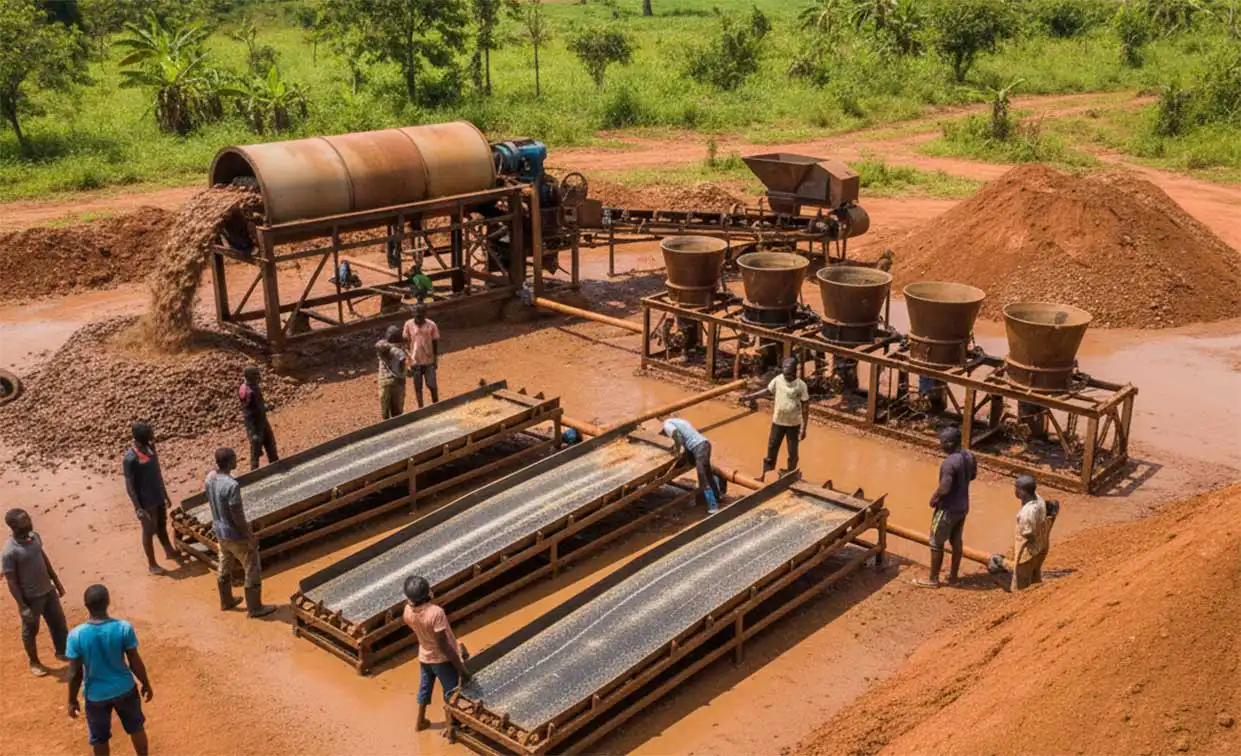
| Ore Type: | Laterite alluvial gold, clay >45% |
| Capacidad: | 60 TPH |
| Configuration: | Trommel Scrubber + Centrifugal Concentrator + Shaking Table |
| Recovery Rate: | 93% |
| El reto: | Clay content above 45% rendered the existing trommel screen ineffective—estimated recovery below 71%. |
| Our Solution: | A trommel scrubber with extended solid drum section fully disintegrated clay balls before sizing; a centrifugal concentrator captured residual fine gold. Recovery reached 93% within the first month. |
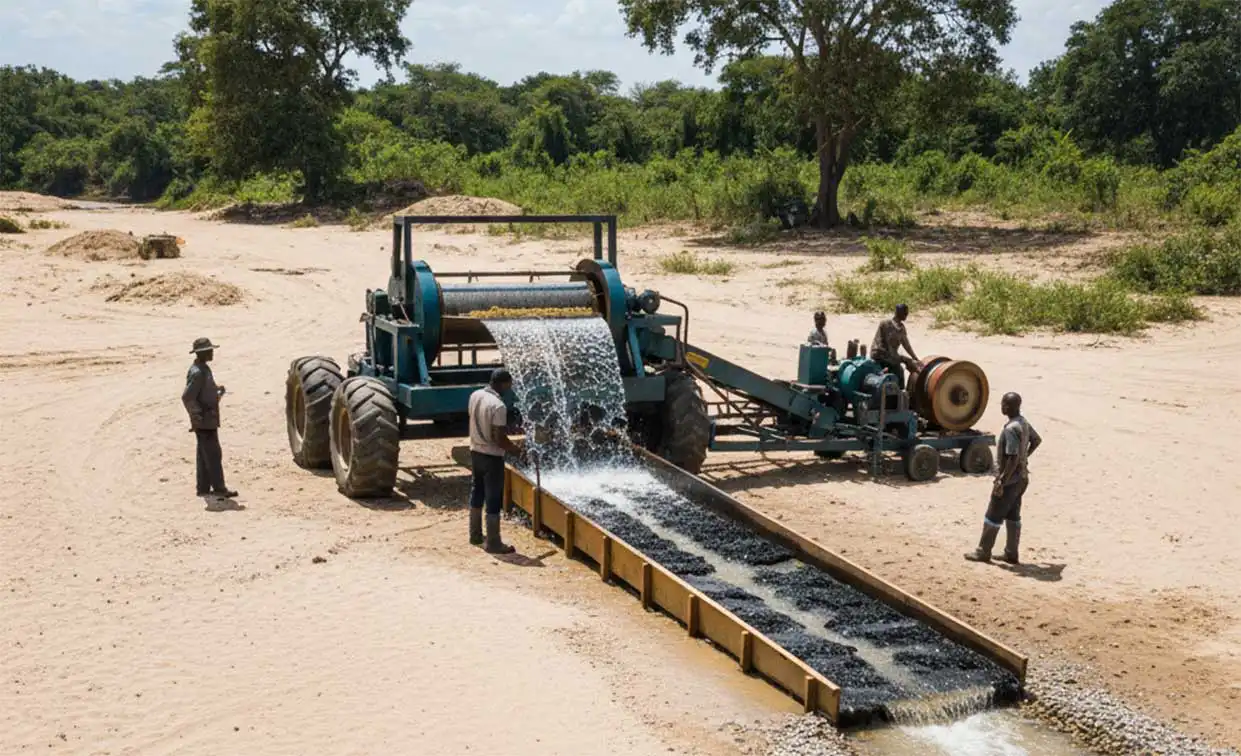
| Ore Type: | Free alluvial gold in sandy gravel, clay <8% |
| Capacidad: | 40 TPH |
| Configuration: | Portable Trommel Screen + Sluice Box + Centrifugal Concentrator |
| Recovery Rate: | 95% |
| El reto: | The claim area shifted seasonally, requiring full plant relocation without specialized transport equipment. |
| Our Solution: | A portable trommel on a wheeled chassis with tool-free modular connections enabled same-crew relocation; high-pressure spray bars maintained 40 TPH without heavy scrubbing. |
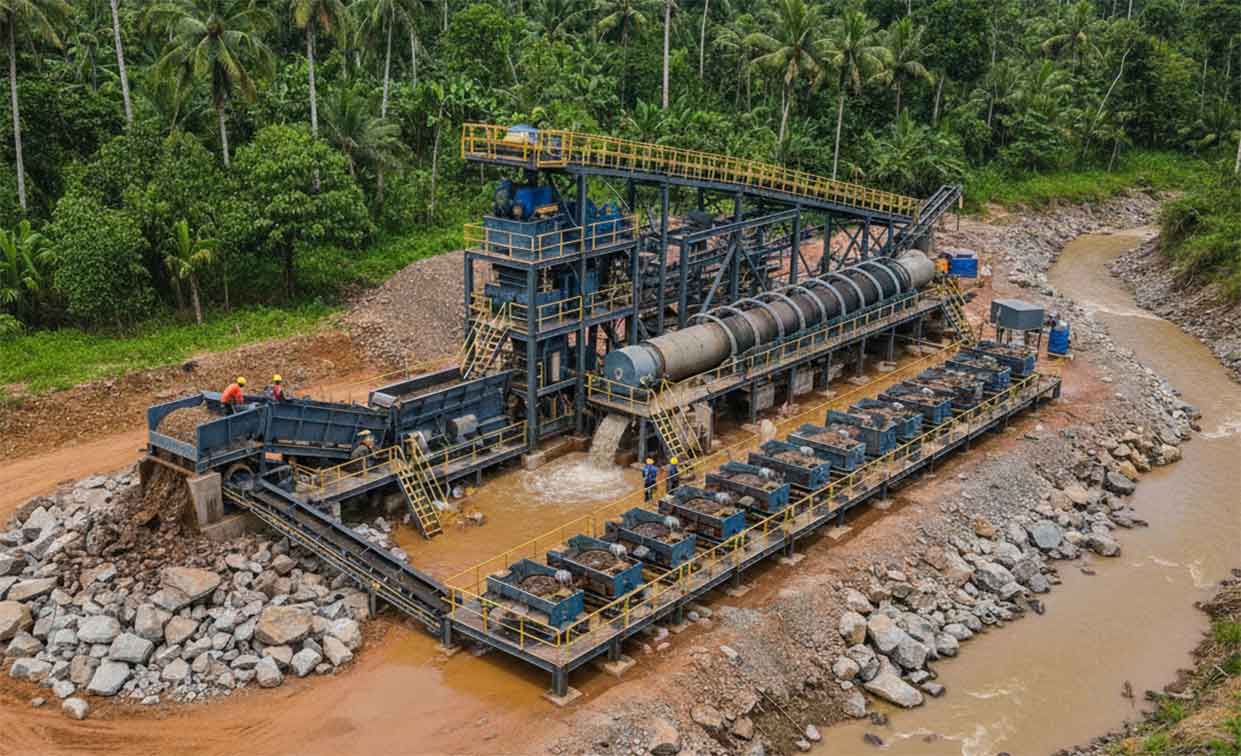
| Ore Type: | Alluvial gold, boulders up to 500mm, clay 25% | |
| Capacidad: | 200 TPH | |
| Configuration: | Derocker + Apron Feeder + Trommel Scrubber + Vibrating Screen + Jig + Centrifugal Concentrator | |
| Recovery Rate: | 91% | |
| El reto: | Boulders up to 500mm repeatedly damaged the primary washing equipment while moderate clay content simultaneously demanded active scrubbing. | |
| Our Solution: | An upstream derocker intercepts all material above 350mm before it reaches the scrubber, eliminating liner damage. No unscheduled shutdowns recorded in the first eight months at 200 TPH. |
What a Gold Washing Plant Actually Costs to Operate?
Equipment purchase price accounts for only 30–40% of what a gold washing plant actually costs to operate. The remaining 60–70%—energy, wear parts, water, labor, and downtime—accumulates every operating day and determines whether the investment is genuinely profitable.
1. Total Cost of Ownership Breakdown
| Cost Category | Typical Share of TCO | Key Variables |
| Equipment Purchase | 30–40% | Capacity, configuration complexity |
| Energy (Diesel / Grid) | 20–25% | Drive type, grid stability, fuel price |
| Wear Parts & Screening Media | 10–15% | Material abrasiveness, screen type |
| Water Supply & Recycling | 8–12% | Site remoteness, recycling circuit |
| Labor & Operator Training | 10–15% | Automation level, local wage rates |
| Unscheduled Downtime Losses | 5–10% | Component quality, maintenance access |
2. The Four Hidden Costs Buyers Consistently Underestimate
1)Screen Media Replacement: Steel wire mesh in high-abrasion alluvial environments typically fails within 3–4 months, requiring frequent replacement and the downtime that comes with it. Polyurethane panels last 5× longer under identical conditions—a difference that compounds significantly across a full operating season.
2)Unscheduled Downtime: A single day of unplanned downtime on a 100 TPH plant processing 2 g/t ore at $60/gram costs approximately $12,000 in lost production—independent of any repair costs. Plants without upstream derocker protection or pre-shipment testing are disproportionately exposed to this risk.
3)Water Supply Cost: In remote sites without open-loop water access, trucking or pumping freshwater can cost $5–15 per cubic meter. A plant processing 100 TPH without a recirculation circuit consumes 150–300m³ of water per hour—a cost that renders many otherwise viable deposits completely uneconomical.
4)Recovery Rate Gap: The difference between an 85% and a 93% recovery rate is not an engineering footnote—it is 8% of every gram of gold in your deposit, lost permanently to tailings. On a deposit averaging 1.5 g/t processed at 150 TPH, that 8-point gap represents approximately $155,000 in unrecovered revenue per month at current gold prices.
ROI Optimization and Cost Reduction Strategies
Capital payback speed is determined by two levers operating simultaneously: maximizing gold revenue out and minimizing operating cost in. The following strategies target both sides of that equation with the highest impact-to-investment ratio.
1. Prioritize Recovery Rate Over Throughput
Increasing throughput from 100 to 110 TPH adds 10% more material processed. Increasing recovery rate from 85% to 93% adds 9.4% more gold captured from the same material—without processing a single additional ton. For most alluvial operations, recovery optimization delivers faster ROI than capacity expansion and requires no additional feed or water.
2. Switch from Reactive to Scheduled Maintenance
Reactive maintenance costs three to five times more than scheduled replacement when factoring in emergency parts sourcing and unplanned downtime. Establishing fixed replacement intervals for screen panels, liners, and spray nozzles converts unpredictable shutdowns into controlled, budgeted maintenance windows.
3. Integrate Water Recirculation from Day One
Retrofitting a recirculation circuit onto an existing plant costs significantly more than specifying it upfront—in both hardware and installation downtime. Closed-loop water management reduces daily freshwater consumption by over 80%, eliminating the cost that compounds most severely in remote environments.
4. Match Recovery Circuit to Your Ore
Overbuilding recovery circuits on a coarse-gold deposit inflates CAPEX and daily power consumption without proportional gains. Underbuilding on a fine-gold, high-clay deposit guarantees chronic loss. A metallurgical assessment before equipment specification typically costs less than 0.5% of total plant value—and directly determines the efficiency of the remaining 99.5%.
Estimated Payback Period
By implementing the recovery and cost strategies above, our systems are able to achieve the recovery rates below.
| Scenario | Capacidad | Grade | Recovery | Est. Payback |
| Small Portable | 30 TPH | 0.15 g/t | 88% | 3–5 weeks |
| Mid-Scale Mobile | 80 TPH | 0.20 g/t | 92% | 2–4 weeks |
| Industrial Stationary | 200 TPH | 0.25 g/t | 94% | 3–5 weeks |
Note: Estimates based on $85/g gold price, 10 operating hours/day, and 26 working days/month. Actual payback varies with site-specific OPEX and ore variability. Contact us for a free site-specific calculation.
How a Gold Washing Plant Works?
A gold washing plant separates gold from raw ore through four sequential stages. Each stage targets a specific physical property of the material—size, density, and weight—to progressively concentrate gold while discarding waste.
Stage 1: Feeding and Pre-Screening
- Raw ore is loaded into the feed hopper at a controlled, consistent rate.
- Material passes through a static grizzly or derocker, which removes oversized boulders.
- Clean, sized feed is delivered to the primary washing unit at a stable rate, protecting downstream equipment from impact damage.
Stage 2: Washing and Scrubbing
- Sized feed enters the primary washing unit—a trommel screen for low-clay ore, a trommel scrubber for high-clay ore.
- High-pressure water jets or autogenous scrubbing action dissolve and dislodge clay coatings from the ore surface.
- Gold particles are fully liberated from the surrounding matrix and suspended in the water stream, ready for sizing.
Stage 3: Sizing and Classification
- The slurry passes through a screening deck that separates material by particle size.
- Oversized gravel is discharged as waste; the gold-bearing undersize fraction is directed into the recovery circuit.
- Material enters the recovery stage at a controlled, classified particle size—the critical condition for efficient gravity separation.
Stage 4: Gravity Concentration and Recovery
- Classified material enters a multi-stage recovery circuit: sluice boxes capture coarse gold, centrifugal concentrators and jigs target the mid-range fraction, and shaking tables recover the finest particles.
- Each unit exploits gold’s high specific gravity (19.3 g/cm³)—roughly seven times that of gangue minerals—to separate gold from waste by density.
- Concentrate is collected at each stage and combined for final cleanup, while tailings are discharged.
How to Match Your Washing Configuration to Ore Type?
The primary cause of fine gold loss is a mismatch between ore characteristics and washing equipment. Unbroken sticky clay forms “clay balls” that trap gold particles and flush them into the tailings, while improper screening creates water turbulence that washes fine gold away. To achieve peak recovery, the hardware configuration must perfectly align with the physical properties of the ore. Here are three engineered setups designed for maximum mineral liberation and operational profitability.
The Problem:
Riverbed gravels contain loose, free gold but require rapid sizing. Large rocks entering the recovery zone create severe water turbulence, washing fine gold away.
Our Engineered Setup: Gold Washing Plant with Trommel Screen

Operational Advantage:
- Fully screened drum dedicates the entire drum length to sizing—no scrubbing section—delivering the highest throughput per diameter of any configuration.
- High-pressure internal spray bars uniformly rinse material across the full drum length without requiring extended retention time.
- Lowest water and energy consumption per ton processed compared to scrubber configurations on equivalent material.
- Minimal clay buildup inside the drum reduces daily maintenance time and maximizes operational uptime.
- Most cost-effective solution for clean riverbed and alluvial deposits where liberation is not the bottleneck.
The Problem:
Sticky, rubber-like clay shields the gold, rendering standard water sprays completely ineffective. Gold remains trapped inside clay balls through every downstream recovery unit.
Our Engineered Setup: Gold Washing Plant with Trommel Screen

Operational Advantage:
- Extended solid drum section creates an autogenous grinding environment—ore particles impact each other at high velocity, reducing clay balls to low-viscosity slurry.
- Adjustable retention time via drum speed and inclination ensures complete clay disintegration regardless of feed variability.
- Integrated rear screen handles both scrubbing and sizing in a single machine, eliminating the need for a separate screening unit.
- Lifter bar geometry is configurable to match specific clay plasticity—from moderately sticky saprolite to highly cohesive laterite.
- Higher fine gold recovery versus trommel screen configurations on clay-bound deposits by ensuring full liberation before the recovery stage.
The Problem:
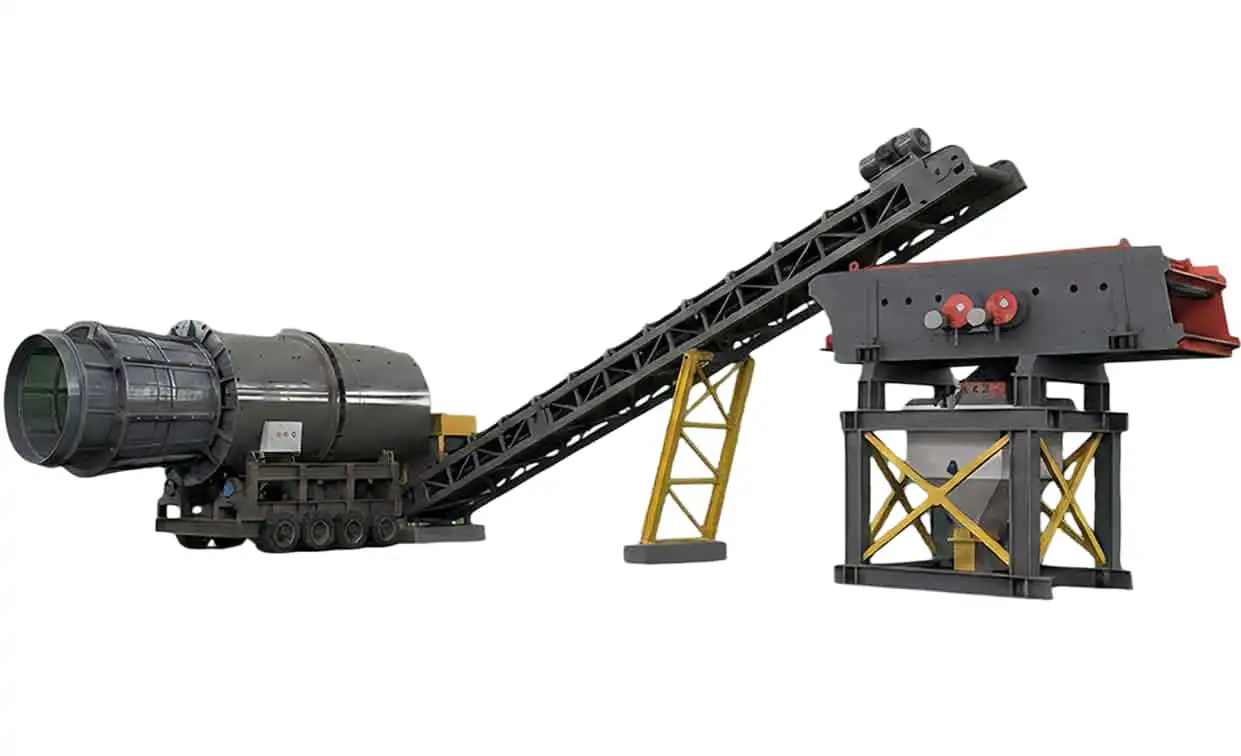
Operations at 200–500+ TPH face a mix of stubborn clay and massive boulders, requiring both extreme scrubbing power and high-volume sizing accuracy simultaneously.
Our Engineered Setup: Separated Scrubber + Independent Shaker Plant
Operational Advantage:
- Upstream derocker intercepts all material above 350mm before the scrubber, eliminating liner damage and extending primary equipment service life by up to three times.
- Separating scrubbing and sizing into dedicated machines removes the throughput ceiling imposed by a single combined unit at high feed rates.
- Independent double-deck vibrating screen maximizes active screening area—preventing heavy rocks from damaging precision mesh and maintaining sizing accuracy at 200+ TPH.
- Jig and centrifugal concentrator in series capture both coarse and fine gold fractions across the full particle size range liberated by the scrubber.
- Modular layout allows each stage to be maintained or upgraded independently without shutting down the entire circuit.
Solutions for Challenging Mining Site Conditions
Real-world mining sites present brutal environmental and geological obstacles. We engineer specialized technical countermeasures to ensure your operation remains productive even under the most demanding site conditions.
1. Self-Contained Off-Grid Production Units for Remote Sites
Our off-grid configurations integrate diesel-electric gensets with VFD load optimization, onboard water pumping, and sealed hydraulic circuits that minimize freshwater demand. No external infrastructure required—fully operational within days of reaching the site.
2. Closed-Loop Zero-Discharge Processing for Regulated Mining Zones
Our closed-loop water recycling circuit recovers over 85% of process water for re-use, paired with integrated tailings settling ponds that prevent untreated slurry from leaving the processing boundary. Zero-discharge is engineered into the base flowsheet—not bolted on as an afterthought.
3. Upstream Derocker Protection Against Boulder-Heavy Overburden
Boulders exceeding 600mm fed directly into a trommel cause liner failures and unplanned shutdowns lasting days. A heavy-duty derocker positioned upstream intercepts all oversize material before it reaches the primary washing stage—eliminating the most common cause of unscheduled downtime in high-boulder deposits and tripling the service life of downstream equipment.
4. Voltage-Unstable Grid Connections Protected by Full-Plant VFD Surge Control
Every drive on our Gold washing plant is protected by Variable Frequency Drives (VFD) that absorb voltage fluctuations before they reach the motor windings. This means your equipment runs within safe electrical parameters regardless of grid quality, eliminating the single most common cause of premature motor failure in developing-region mining operations.
Modern Gold Mining Trends
The gold mining industry is shifting—regulatory pressure, smarter operations, and untapped legacy assets are redefining what a profitable mine looks like. Our equipment is engineered to move with these changes, not against them.
Mercury-Free Compliance
Over 130 countries are now bound by the Minamata Convention, and international refineries increasingly require documented proof of mercury-free origin before accepting material. Our gravity-based systems—centrifugal concentrators, jigs, and shaking tables—deliver full regulatory compliance and equivalent fine gold recovery with zero chemical inputs.
Real-Time Production Monitoring
Feed rate deviations and water ratio drift discovered at end-of-shift have already cost hours of recovery. Our Gold washing plant integrates live flowmeters and pulp density sensors that flag process deviations the moment they occur—consistently recovering 5–10% of production losses that reactive management simply misses.
Tailings Reprocessing and Valorization
Historical sluice-only operations left behind tailings stockpiles with recoverable gold concentrations that older technology simply could not capture. Our centrifugal concentration circuits are specifically configured for fine-particle reprocessing, allowing operators to monetize existing tailings without the permitting complexity of opening a new mine.
Automated and Energy-Efficient Operations
Rising diesel and electricity costs across major alluvial gold regions are accelerating the shift toward automated, energy-optimized plant designs. Operators can no longer absorb inefficiencies that are tolerable when energy is cheap. Our VFD-driven systems reduce energy consumption by up to 25%, while integrated monitoring circuits allow a single operator to manage processes that previously required a full shift crew—cutting both power bills and labor overhead simultaneously.
Comprehensive Manufacturing and Engineering Support
Custom plant flowsheet and layout
We design optimized process flowsheets tailored to your specific terrain and production targets. Our engineers focus on balancing material flow and system integration to eliminate bottlenecks, ensuring your gold washing plant operates at peak efficiency from day one.
Industrial production and strict testing
All equipment is manufactured in our ISO-certified facilities using high-grade structural steel and premium wear-resistant parts. Every unit undergoes strict inspection and carries international certifications (CE/SGS) to ensure reliability in the world’s most demanding mining environments.
Global installation and commissioning
For maximum efficiency, we deploy experienced technical teams worldwide to supervise onsite assembly and integration. Our hands-on commissioning services ensure recovery modules are precision-tuned to your ore characteristics for immediate production success.
After-sales spare parts and training
To protect your uptime, we maintain a comprehensive inventory of critical wear parts for rapid global dispatch. We also provide professional training for your onsite crew, empowering them with the skills to operate, maintain, and troubleshoot the plant independently.
Customize Your Solutions
Our engineering team is here to help you design a custom flow sheet that perfectly matches your ore, minimizing fine gold loss and maximizing your recovery rate.
To help us provide the best recommendation, please share:
- Material Details: Ore type, estimated clay content, and max boulder size.
- Desired Capacity: Your target processing throughput.
- Site Preferences: Mobile or stationary setup? Wet wash or dry wash?
- Special Needs: Any challenges you’d like us to solve together.
Drop us a message. We will gladly provide a customized equipment configuration and a free ROI estimate within 24 hours.
